
Wellbeing Nutrition is a Mumbai-based, science-driven nutraceutical brand founded in 2019 by Avnish Chhabria . It has rapidly transformed from a niche startup into a market leader by disrupting the traditional “pill-and-tablet” supplement industry. Its core innovation lies in offering **clean-label, plant-based nutrition in advanced, consumer-friendly formats** like oral thin strips (“Melts”) and slow-release capsules .
The brand’s success is rooted in its ability to solve three key market problems: a lack of consumer trust in supplement quality, an aversion to traditional pill formats, and an opportunity in high-growth wellness categories like “beauty-from-within” . This strategy attracted blue-chip investors like Fireside Ventures and Hindustan Unilever (HUL) early on . In February 2026, the company achieved a major milestone with pharmaceutical giant **USV acquiring a 79% majority stake for approximately ₹1,583 crore**, marking one of the largest exits in the Indian D2C wellness space .
1. Brand Origin and Foundational Vision
Wellbeing Nutrition was founded by **Avnish Chhabria**, a serial entrepreneur and Ironman triathlete whose personal frustration with the lack of clean, organic, and effective Indian nutrition brands sparked the idea .
Genesis at Johns Hopkins: The concept was not born in a garage but through structured research starting in 2016 at Johns Hopkins University, where Chhabria focused on innovating nutrition delivery systems .
The Core Problem: The Indian market was flooded with low-quality, generic supplements in formats (tablets/capsules) that consumers, especially millennials, did not trust or want to take . The goal was to move nutrition away from a “medical” framework to one that felt “cool,” lifestyle-oriented, and enjoyable .
Initial Focus: The brand launched with a narrow but focused range of products like “Grandma’s Kadha” and “Daily Greens,” demonstrating the potential of its format innovation even before scaling up .
2. Key Success Strategies and Marketing Mix
Wellbeing Nutrition’s rise is a textbook example of executing a differentiated strategy across product, price, place, and promotion.
Product: Innovation-Led Differentiation
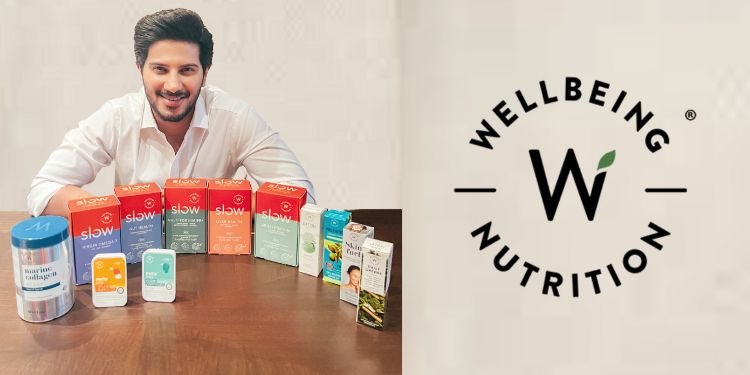
Advanced Delivery Formats: This is Wellbeing’s strongest differentiator. It pioneered **oral thin strips (“Melts”)** in India—a technology adapted from pharma—for vitamins and supplements, solving the problem of pill fatigue . It also introduced **slow-release capsules** under its “SLOW” range and effervescent tablets .
Beauty-from-Within” Leadership: The brand identified and aggressively built the ingestible beauty category in India. Its premium **Korean Marine Collagen** and **Skin Fuel Glutathione** ranges, featuring nano-hydrolyzed peptides for better absorption, are flagship products .
Science-Backed, Clean Ingredients: All products are manufactured in US FDA-approved facilities, feature clinically studied ingredients, and hold certifications like USDA Organic. It is one of the few brands globally with a **Clean Label Project-certified protein range**, ensuring purity and transparency .
Premium Positioning: Wellbeing Nutrition is priced at a premium compared to mass-market competitors. This is justified by its superior ingredient sourcing (from 19 countries), patented technologies, and clinically proven efficacy.
Expanding Portfolio: The product architecture is now built on three pillars: **Sports & Performance** (47% of sales, including whey and vegan protein), **Daily Essentials** (28% of sales, led by the SLOW magnesium range), and **Beauty & HSN** (19% of sales) . It has also recently entered the kids’ nutrition segment .
Price: Value Through Premium Efficacy
Value Perception: Consumer feedback often highlights that while the price is high (e.g., for probiotics), the perceived quality, innovative formats, and noticeable results (e.g., improved digestion, reduced bloating) justify the cost for its target audience . The average order value stands at a healthy **₹1,900** .
Place: Omnichannel Dominance
Digital-First Foundation: The brand built a strong D2C presence through its website and key marketplaces like Amazon and Flipkart, generating thousands of monthly orders .
Massive Offline Expansion: Unlike a pure-play digital brand, Wellbeing Nutrition aggressively expanded offline to build trust and accessibility. It now retails through over **6,000 outlets**, including pharmacy chains (Apollo Pharmacy), modern trade (Natures Basket, Spencer’s), and beauty salons (Lakme) .
Quick Commerce Surge: Recognizing changing consumer habits, the brand pivoted to quick commerce, which has seen **8-10x growth** and is projected to contribute 30-40% of revenues .
Global Reach: It has a growing international presence in over 25 markets, including the US, UK, and UAE, with international sales expected to scale to 25% of revenue over five years .
Promotion: Celebrity Advocacy and Educational Storytelling**
Equity-Light Celebrity Partnerships: The brand masterfully uses celebrity associations not just as paid ambassadors, but as “brand equity partners.” It has onboarded a roster of credible faces including **Rakul Preet Singh, Mira Kapoor, Dulquer Salmaan, Sharvari, and most recently Malavika Mohanan** .
The “Beauty from Within” Campaign: This long-running campaign, featuring ambassadors like Sharvari, effectively shifts the narrative from topical skincare to internal nutrition. It taps into the growing consumer preference for authenticity, with the brand noting that **84% of consumers prefer authenticity over perfected advertising** .
Simplifying Science: The marketing strategy focuses on educating the consumer. For instance, the campaign with Malavika Mohanan aims to explain that collagen is not just a “quick fix” for glow but the skin’s primary structural protein that depletes over time, requiring consistent, daily nutrition .
Innovative Collaborations: It secured a landmark global collaboration with **Disney and Marvel** to launch a USDA Organic-certified kids’ nutrition range, a world-first that helped it enter the parenting segment with instant credibility .
3. Financial Performance and Market Impact
Wellbeing Nutrition’s financial discipline and growth trajectory have been exceptional.
Explosive Growth: The company has consistently posted triple-digit growth, clocking **120% growth** over the two years leading up to 2026 . Revenue has grown from **₹42 crore in FY23 to an estimated ₹260+ crore in FY26** .
Strong Unit Economics: It has maintained a **capital efficiency ratio of ~3x** and gross margins of **60%** , demonstrating a sustainable business model . It is close to breakeven with a positive contribution margin .
High Consumer Retention: A key metric for any efficacy-based brand is retention, and Wellbeing Nutrition boasts a strong **45% repeat rate**, indicating that consumers see tangible results and trust the brand for their ongoing wellness needs .
4. The Landmark Acquisition by USV

In February 2026, Wellbeing Nutrition announced that **USV Private Limited** would acquire a **79% stake** in a deal valuing the company at **₹1,583 crore** (approximately $183 million) .
The Strategic Fit: This acquisition is not just a financial exit but a strategic partnership. USV, a 65-year-old pharmaceutical giant with deep expertise in diabetes and cardiology, provides Wellbeing Nutrition with:
Scientific Credibility: A pharma-grade endorsement of its “clinically-backed” product ethos .
Manufacturing & Regulatory Depth: Access to USV’s global quality systems and infrastructure to scale safely .
Distribution Muscle: The potential to leverage USV’s vast network to expand reach even further .
The Exit for Investors: The deal allowed early backers **Fireside Ventures and HUL** to exit with significant returns, marking a major success story for India’s D2C ecosystem .
Continuity of Leadership: Crucially, founder **Avnish Chhabria and co-founder Saurabh Kapoor will continue to run the business**, ensuring the brand’s mission and culture remain intact .
5. Future Outlook and Strategic Roadmap

With the USV partnership providing a powerful new platform, Wellbeing Nutrition is poised for its next phase of aggressive growth.
1. Scaling Core Categories: It aims to double revenue, targeting **₹400-450 crore by FY27** . The focus will be on its three core pillars, with protein already contributing 30% of revenue .
2. Capturing the Kids’ Nutrition Market: This is a key new growth engine. The company estimates this market at ₹400-450 crore and aims for a **10-15% share in its first year** .
3. Deepening Omnichannel and Quick Commerce: Offline expansion will continue at a pace of 600-800 stores annually, while quick commerce is expected to become a dominant channel, potentially accounting for 30-40% of revenues .
4. International Expansion: With USV’s backing, the brand is well-positioned to accelerate its growth in the Middle East, US, and UK markets, with a long-term goal of making international sales a quarter of its business .
In conclusion, Wellbeing Nutrition has successfully built a trusted, science-backed brand by obsessing over product innovation and deeply understanding the evolving Indian consumer. Its acquisition by USV represents a powerful validation of its model and sets the stage for it to become a dominant, full-spectrum player in the global wellness market.