
Uniqlo’s LifeWear strategy, fully articulated since 2013, repositions the brand from a purveyor of basic casual wear to a provider of “clothing that is designed to make everyone’s life better” . The strategy’s brilliance lies in its ability to create a clear brand differentiation from fast fashion competitors by emphasizing timelessness over trend-chasing, technological innovation over disposability, and democratic accessibility over exclusivity .
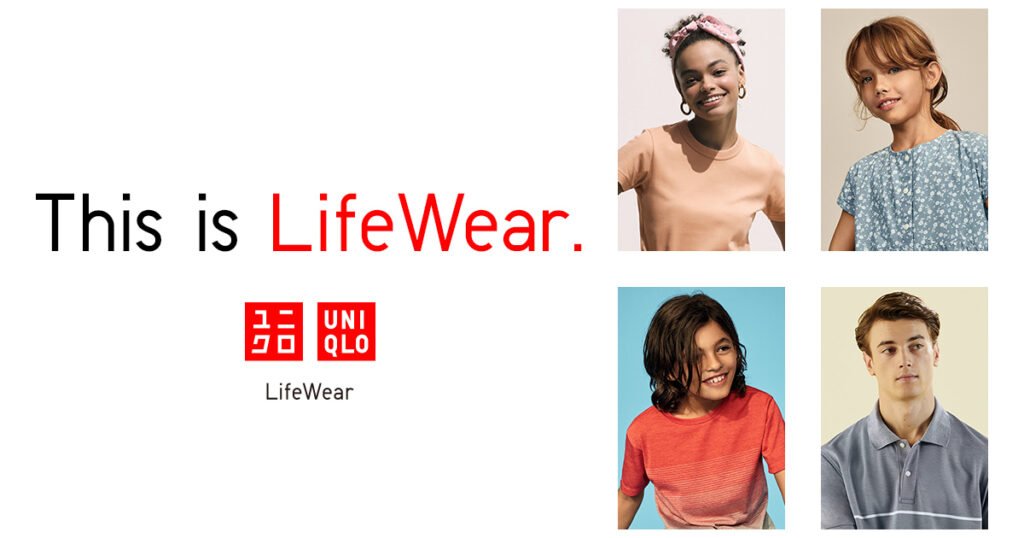
The LifeWear philosophy functions as both an internal compass guiding product development and an external communication framework that helps consumers understand Uniqlo’s unique value proposition . Recent marketing activations across global markets demonstrate how the brand consistently translates this philosophy into tangible consumer experiences, from immersive pop-ups in Singapore to high-profile cultural events at New York’s Museum of Modern Art .
—
1. The Philosophical Foundation: Defining LifeWear
At its core, LifeWear represents Uniqlo’s answer to a fundamental strategic question: “What are we really selling?” According to brand strategy experts, this clarity of purpose is essential for any business, serving as a “lighthouse” that illuminates decision-making and direction .
Beyond Fast Fashion
Uniqlo founder and Fast Retailing Chairman, President & CEO Tadashi Yanai has been emphatic about distancing the brand from the fast fashion label: “It is a common misperception, but Uniqlo is not fast fashion. We do not make throwaway clothes. We make clothes that transcend the times and can be worn year after year. In short, we make clothes that are timeless” .
This positioning directly addresses consumer fatigue with disposable fashion and growing interest in sustainable consumption. By framing its products as investments rather than impulse purchases, Uniqlo appeals to value-conscious consumers who nonetheless refuse to compromise on quality.
The Democratic Mission
Yanai articulates the brand’s mission as the “democratisation of clothing”: “To make it a reality, we offer superior quality at affordable prices worldwide. In changing clothing, we look to change people’s everyday lives, and ultimately, to change the world” . This mission statement elevates the brand beyond commerce into something approaching social purpose—a powerful emotional anchor for marketing communications.
The “Made for all” philosophy positions Uniqlo’s clothing as transcending “age, gender, ethnicity and other defining factors” . Creative Director Clare Waight Keller emphasizes that this universality requires deep understanding of diverse markets: “Working in Asia has been a learning curve for me because each region is unique—climate, culture, and lifestyle vary enormously. Thailand, for example, is completely different from Japan, which is completely different from Singapore” .
—
2. Product as Marketing: The Technology Pillar
One of the most distinctive aspects of Uniqlo’s marketing strategy is how product innovation itself serves as a primary marketing vehicle. The brand’s long-standing partnership with materials innovator Toray Industries, spanning over two decades, enables this approach .
The Art and Science of LifeWear
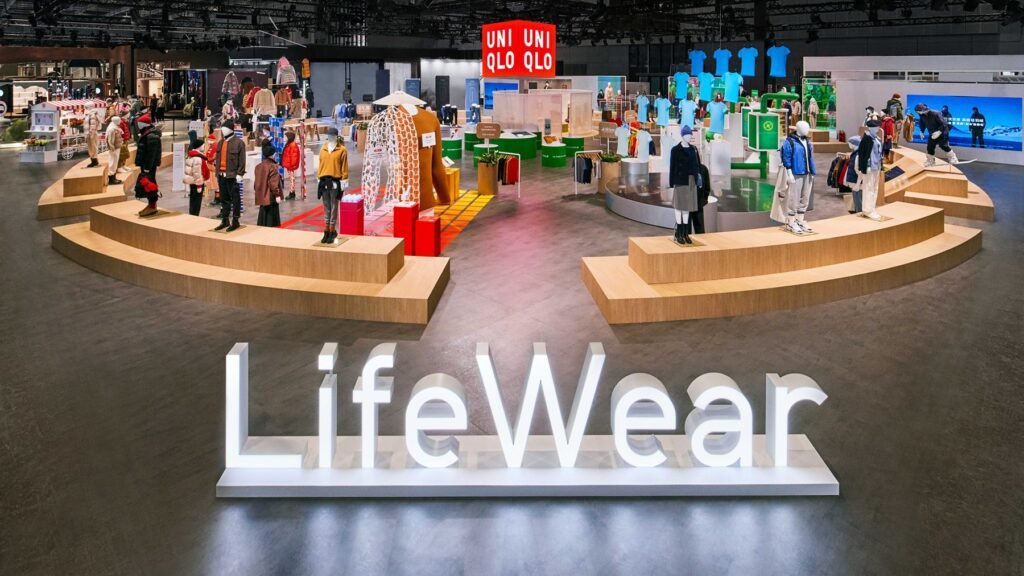
The 20th anniversary celebration in the U.S., titled “The Art and Science of LifeWear,” explicitly showcased how technology and design intersect . The event at MoMA featured interactive exhibitions organized around three pillars:
– Technology For All : Highlighting innovations developed with Toray, including HEATTECH, AIRism, and PUFFTECH
– Art For All: Celebrating Uniqlo’s decade-plus partnership with MoMA
– Heart For All: Underscoring the brand’s mission to enrich lives globally
This framework communicates that Uniqlo’s products are not merely commodities but sophisticated solutions born from serious R&D investment. Toray’s expertise spans “aerospace to pharmaceuticals,” lending credibility to claims of technological sophistication .
HEATTECH as Marketing Platform
HEATTECH serves as perhaps the clearest example of product-as-marketing. The technology—fabric that converts body moisture into heat—is inherently newsworthy and demonstrable . Uniqlo leverages this through seasonal campaigns featuring global ambassadors who embody the product’s benefits.
The 2025 HEATTECH campaign featured Cate Blanchett and Roger Federer, showing the product’s versatility across different lifestyles and demographics . The introduction of HEATTECH Extra Warm Cashmere Blend (1.5x warmer, 30% lighter, with 9% cashmere) provided a tangible product story about continuous innovation .
In India, the brand localized this approach with Bollywood actor Kareena Kapoor Khan in a campaign “set against the tranquil backdrop of a hill station,” showing the actor enjoying a “cozy winter getaway” while layering her HEATTECH Cashmere thermal . This localization maintains the global technology narrative while making it culturally relevant.
—
3. Experiential Marketing: Making Philosophy Tangible
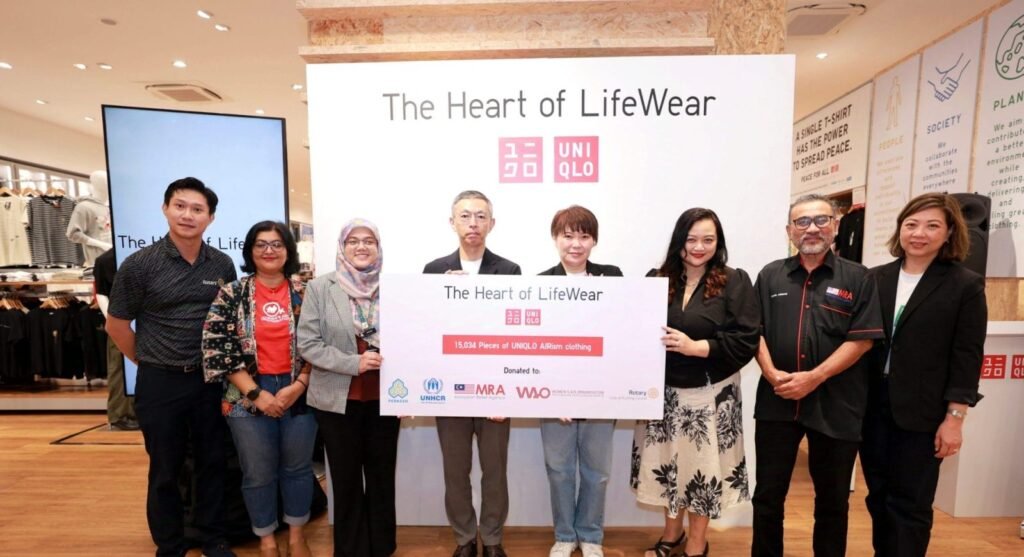
Recognizing that LifeWear can feel “abstract” to consumers, Uniqlo has increasingly invested in experiential activations that make the philosophy tangible .
The Singapore Approach: Community-First Experiences
Uniqlo Singapore has emerged as a laboratory for innovative experiential marketing. Marketing Director Paulene Ong explains the strategic shift: “More and more, consumers are being more discerning. There is a need to drive more earned organic content” .
The brand’s 2025 Spring/Summer pop-up at Singapore’s National Design Centre marked a significant departure from traditional exclusivity-driven marketing. For the first time, the collection was opened to public preview before launch, allowing visitors to scan barcodes and add items to wishlists on the Uniqlo app . Ong noted this reflected the brand’s commitment to “building deeper connections with its community, ambassadors, customers and corporate partners” .
The activation brought the “LifeWearCrew community” of creator partners to showcase various looks, and featured interactive elements including:
– Preview of online-exclusive sizes
– The latest issue of LifeWear magazine
– Summer-themed gifts like iron-on patches
– Floral bouquets for the first 100 visitors daily
– Collaborations with local cafes for curated treats
Social Media Evolution: From Products to People
The Singapore team also undertook a social media rebrand, shifting focus “more on its consumers and storytelling rather than its product.” Ong explained: “We believe that to truly embody our LifeWear philosophy, we need to foster a community that shares and resonates with our brand values. This meant shifting to a more engaging two-way dialogue with our community in a locally relevant way and repositioning our channels as spaces for meaningful conversations rather than just product promotion” .
The 2026 Spring/Summer Beach Club Takeover
Taking experiential marketing further, Uniqlo Singapore staged an invite-only takeover of Tanjong Beach Club for its 2026 Spring/Summer collection launch. Rather than a store-led or digital-first approach, the brand transformed the space into an immersive environment inspired by “Urban Rome and the Amalfi Coast” .
The strategic thinking behind this approach is noteworthy. Ong explained: “Having an event, season after season, is not something new, but as time goes by, and how the marketing ecosystem and landscape is changing, we’re also recognising the importance of earned media” .
The beach club setting was deliberately chosen to place guests in a “holiday mindset—not just to view the clothes, but to imagine wearing them” . This experiential approach allows consumers to understand product versatility—”to think of different ways to reuse their pieces again and again”—which sits at the heart of the LifeWear proposition .
The activation also emphasized materiality, with linen collections showcased through “open layouts, natural light and flowing fabrics that moved with the sea breeze”—something a conventional store environment cannot fully communicate .
4. Ambassador Strategy: Embodied Values
Uniqlo’s choice of brand ambassadors reveals another dimension of its LifeWear marketing strategy. Rather than seeking maximum celebrity wattage, the brand selects individuals who authentically embody LifeWear values.
The Cate Blanchett and Roger Federer Alignment
The appointments of Cate Blanchett and Roger Federer as Global Brand Ambassadors represent this philosophy in action. At the MoMA event, Blanchett articulated the brand’s democratic ethos: “It shouldn’t be a luxury to have good quality, well-made clothes and I think that’s in the DNA of the UNIQLO brand” .
Both ambassadors bring more than fame—they bring credibility through sustained excellence in their fields and demonstrated humanitarian commitment. Federer’s foundation supports early childhood education; Blanchett is a “passionate humanitarian and advocate for climate action” . These associations reinforce Uniqlo’s positioning as a brand concerned with broader social good.
Creative Leadership from Clare Waight Keller
The appointment of Clare Waight Keller—former creative director of Givenchy and Chloé—as Uniqlo’s Creative Director signals how the brand balances its mass-market accessibility with design credibility . Waight Keller describes her role as translating experimental ideas into “globally wearable garments that are functional, simple, and stylish” .
Her perspective on inclusivity reflects the LifeWear philosophy: “We’re very conscious of diversity, including size… We also produce a collection for the Muslim market, specifically designed for that region. With scarves, abayas, and all the necessary details, we spent months with local teams to get the right measurements and coverage” .
The KAWS Artist in Residence Innovation
The appointment of contemporary artist KAWS as Uniqlo’s first-ever Artist in Residence represents an innovative expansion of the ambassador concept . Rather than a one-off collaboration, KAWS will “contribute to upcoming art initiatives in UNIQLO stores and with museum partners worldwide, while also shaping future LifeWear collections” . This ongoing relationship deepens the brand’s cultural credibility and provides sustained storytelling opportunities.
—
5. Cultural Institutional Partnerships
Uniqlo’s decade-plus partnership with New York’s Museum of Modern Art (MoMA) demonstrates how institutional affiliations can reinforce brand positioning .
MoMA as Brand Affirmation
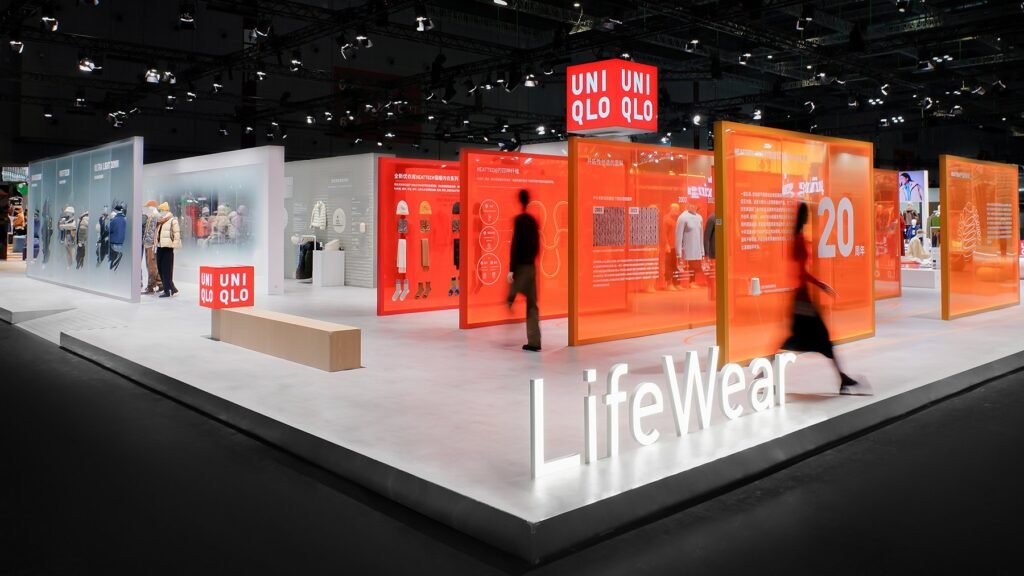
The choice of MoMA for major brand moments—including the 20th U.S. anniversary celebration and LifeWear Day 2025—is strategic. MoMA’s cultural authority lends the brand legitimacy in the design and art worlds, reinforcing the “Art for All” pillar of LifeWear . The association positions Uniqlo not merely as a retailer but as a cultural institution in its own right.
LifeWear Magazine as Content Marketing
The brand’s proprietary LifeWear magazine functions as a sophisticated content marketing vehicle, distributed globally and featuring editorial content that explores the intersection of clothing, design, and daily life . Rather than a traditional catalog, the magazine embodies the brand’s intellectual aspirations and provides a platform for deeper storytelling.
—
6. Strategic Business Extensions: Uniform Services
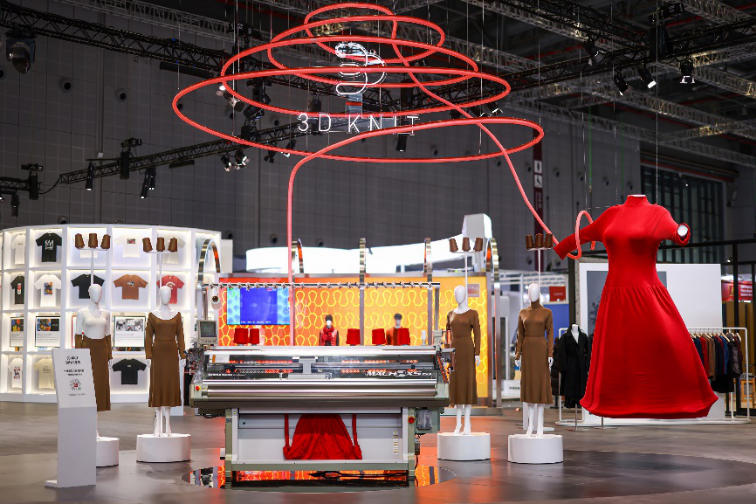
A particularly interesting dimension of LifeWear marketing is how the philosophy enables logical business extensions. Uniqlo has aggressively expanded its uniform services business, projecting that by FY2026, over 20,000 organizations will use Uniqlo clothing as uniforms or workwear .
LifeWear Logic in Uniforms
This expansion is grounded in LifeWear thinking: “With the lines between work and life increasingly blurred, expectations for workplace and daily attire have diversified, with more people seeking clothing that is comfortable, practical, and allows for personal expression” .
By offering “functional options including cooling, warming, ease of movement, and easy care” with “diverse color and pattern options,” Uniqlo addresses the organizational need for practical uniforms while respecting individual employee preferences . This business extension demonstrates how a clear philosophical framework can identify adjacent opportunities that feel authentic rather than opportunistic.
—
7. Localization Within Global Framework
While LifeWear provides a consistent global framework, Uniqlo demonstrates sophisticated localization in execution.
India: Bollywood and HEATTECH
The Indian market campaign featuring Kareena Kapoor Khan adapts the global HEATTECH narrative to local cultural contexts. The campaign “set in a tranquil hill station” shows the actor “enjoying a cozy winter getaway, layering her HEATTECH Cashmere thermal” . This localized storytelling maintains the product’s core benefits while making them culturally resonant.
Singapore: Community-Centric Activation
Singapore’s approach emphasizes community building and earned media, with activations designed to generate “high-quality posts that reflected genuine enjoyment rather than staged promotion” . The brand deliberately brought back “former ambassadors Desmond Tan and Rebecca Lim more than a decade after their initial collaboration,” demonstrating commitment to relationship continuity rather than chasing new faces .
Southeast Asia: Climate-Specific Adaptation
Waight Keller notes the importance of adapting to regional climates and cultures: “The climate differences are enormous, and the challenges of living in humidity, heat, and the ever-changing climate are real.” Technologies like AIRism become particularly relevant in such contexts, and the brand balances “technological innovations with… heritage fabrics” to create “solutions especially suited for the Asian market” .
—
8. Measuring Success: From Transactions to Relationships
The ultimate test of the LifeWear marketing strategy is whether it builds sustainable brand relationships. Ong articulates this aspiration: “The most natural way for people to feel engagement is if the brand is naturally a part of their lives” .
From Paid to Earned Media
The shift toward experiential activations reflects recognition that “paid media and influencer placements” alone cannot build deep connections in an era of discerning consumers . By creating experiences that genuinely delight, Uniqlo generates “earned organic content” that carries greater authenticity than paid alternatives.
Community as Asset
The cultivation of the “LifeWearCrew community” of creator partners represents investment in long-term brand advocacy . These community members don’t simply promote products; they embody the brand’s values and demonstrate how LifeWear integrates into real lives.
—
9. Future Outlook and Challenges
As Uniqlo continues to scale globally, the LifeWear marketing strategy faces several considerations:
Maintaining Philosophical Coherence at Scale
As the brand expands into new markets and categories (including the growing uniform business), maintaining the clarity and coherence of the LifeWear message becomes increasingly challenging. The brand must ensure that each new initiative genuinely reflects the philosophy rather than merely carrying the label.
Balancing Accessibility and Exclusivity
The experiential activations in Singapore—from public previews to invite-only beach club takeovers—reveal a tension between democratic accessibility and the need for curated brand experiences. Uniqlo must navigate this balance carefully, ensuring that premium experiences don’t contradict the “Made for all” positioning.
Competitive Differentiation
As competitors increasingly adopt similar language around quality, timelessness, and functionality, Uniqlo must continue innovating to maintain differentiation. The brand’s long-term partnership with Toray and ongoing material innovations provide one avenue; cultural initiatives and community building provide another.
Sustainability Credentials
While the “timeless not disposable” positioning inherently supports sustainability narratives, consumers increasingly expect concrete evidence of environmental responsibility. Uniqlo must continue developing and communicating its sustainability initiatives to maintain credibility with environmentally conscious consumers.
—
Conclusion
Uniqlo’s LifeWear-driven marketing strategy represents a sophisticated integration of philosophy, product, and experience. By clearly defining “what we’re selling” as something beyond clothing—as a contribution to better living—the brand has created a durable competitive position that transcends seasonal fashion cycles .
The strategy works because it is authentic to the company’s capabilities and consistent across every consumer touchpoint. From the technological innovations developed with Toray to the cultural partnerships with MoMA, from the carefully selected global ambassadors to the localized community activations in Singapore and India, every element reinforces the central message: Uniqlo offers thoughtfully designed clothing that quietly, persistently, makes life work a little better .
In an apparel industry increasingly divided between fast fashion and luxury exclusivity, Uniqlo’s LifeWear positioning stakes out distinctive territory—the democratic provision of genuinely valuable, technologically sophisticated, thoughtfully designed everyday clothing. This clarity of purpose, consistently executed, is the ultimate marketing advantage.