
Rare Rabbit is a premium Indian fashion brand that has redefined men’s (and now family) clothing with a “global design, local sensibilities” approach. Founded in 2015 by Manish Poddar as part of The House of Rare (under the umbrella of the legacy textile firm Radhamani Textiles), the brand has achieved the rare feat of being profitable and bootstrapped for nearly a decade before raising external capital. Its success is built on a foundation of vertical integration, obsessive attention to design detail, and a powerful omnichannel retail strategy. With a valuation approaching ₹3,000 crore and explosive financial growth, Rare Rabbit has successfully captured the aspirations of India’s new generation of style-conscious consumers.
1. Brand Origin and Foundational Vision
Rare Rabbit’s story is one of passion, perseverance, and a deep-rooted understanding of textiles.
The Founder’s Journey: Manish Poddar’s tryst with fashion began in his childhood, experimenting with leftover fabric from his father’s textile business. Inspired by global brands like Zara during a trip to Europe, he identified a gap in the Indian market for international-style clothing tailored for the Indian physique and aesthetic. Before launching Rare Rabbit, he spent years designing and supplying garments to European fashion houses, honing his understanding of global trends .
The Core Mission: The brand was founded with a clear mission: to move Indian men’s fashion beyond the limited palette of greys and whites and offer them a way to experiment with colors, trends, and sophisticated styles . It aimed to sell not just clothing, but a lifestyle of “accessible luxury” .
Bootstrapped Beginnings: Remarkably, Rare Rabbit was built without any external funding for its first nine years. It wasn’t until 2024 that it raised its maiden round of ₹500 crore, led by A91 Partners, with participation from Nikhil Kamath’s Gruhas and the Ravi Modi Family Trust (Manyavar), a testament to the sustainable and profitable business model Manish Poddar had already created .
2. Key Success Strategies and Marketing Mix
Rare Rabbit’s meteoric rise is a result of a meticulously executed strategy across product, price, place, and promotion.
Product: Design-Led Differentiation and Global Inspiration
Global-Local Appeal: Rare Rabbit’s design philosophy is its strongest pillar. It takes minimalist European and global design sensibilities and adapts them specifically for the Indian consumer, ensuring the perfect fit and cultural relevance .
Quirky and Premium Branding: The brand infuses personality into its products with unique touches like naming shirts “Glass Break” or “Drive” and hiding a small, signature rabbit logo in unexpected places on the garments, creating a delightful discovery for the wearer .
Curation Beyond Clothing: The product range extends beyond apparel to include high-fashion accessories like concept eyewear from Japan and even paper-made luggage from Tuscany, reinforcing its premium, lifestyle-oriented brand image .
Category Expansion: Under The House of Rare, the brand has strategically expanded its portfolio to cater to the entire family:
Rareism: A womenswear line offering chic, effortless designs .
Rare Ones: A first-of-its-kind exclusive brand in India for boys aged 4-14, focused on style and self-expression.
Rare’Z: A streetwear and footwear line for design-forward consumers .
Innerv (2025): A premium innerwear line made from ethically sourced, 100% natural cotton, featuring sweat-absorbent technology and minimalist design, targeting the modern, hygiene-conscious man .
Price: Value Through Accessible Luxury
Premium yet Attainable: Rare Rabbit is positioned in the “accessible luxury” segment. With an average order value of around ₹3,000, it targets the affluent Indian middle class that aspires to high-quality, design-led fashion without the prohibitive price tags of international luxury brands .
Value Justification: The pricing is justified by the superior quality of fabrics, precise cuts, and the overall brand experience, both in-store and online. For instance, its new Innerv line is priced starting at ₹799, reflecting its premium positioning within the category .
Place: A Masterful Omnichannel Strategy
Rare Rabbit has built a robust and synergistic omnichannel presence that balances online and offline strengths.
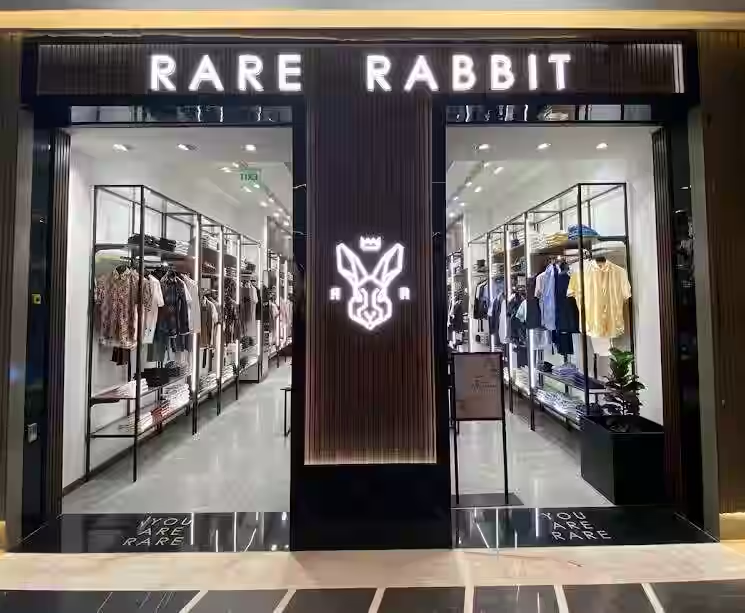
Strong Retail Footprint: The brand operates over **170+ exclusive brand outlets** across India, including high-street locations and major metros, strategically expanding into Tier II and III cities as well . Its stores are designed to be experiential, with curated interiors, fragrances from Spain, and playlists from New York . These stores generate impressive annual revenues, averaging between **₹80 lakhs to ₹1 crore** per outlet.
E-commerce Excellence: Its direct-to-consumer (D2C) website is a major revenue driver, capturing higher margins (55-60%) and fostering a direct relationship with customers.
Marketplace Expansion: The brand smartly leverages third-party marketplaces like Myntra, Flipkart, and Ajio to amplify its reach without diluting its brand identity, with these platforms contributing to about 10% of sales.
Pioneering Quick Commerce (2025): In a bold and innovative move, Rare Rabbit partnered with Zepto to offer 10-minute delivery on a curated selection of its menswear in major Indian cities. This strategic move caters to the instant-gratification needs of urban millennials and Gen Z for last-minute occasions, positioning the brand at the forefront of the next retail revolution.
Promotion: Experiential Retail and Strategic Alliances
In-Store Experience as Marketing: Rare Rabbit treats its physical stores not just as points of sale, but as its most powerful marketing tool. The multi-sensory experience—the look, feel, scent, and sound—creates a lasting brand impression and drives organic word-of-mouth .
Digital-First Engagement: The brand maintains a sharp digital strategy to connect with its younger, tech-savvy audience, focusing on visual platforms to showcase its design aesthetic .
Founder-Led Narrative: Manish Poddar’s personal story of bootstrapped success and his appearance on popular platforms like Nikhil Kamath’s *WTF* podcast have humanized the brand and built a powerful narrative of perseverance and passion that resonates with consumers and aspiring entrepreneurs alike .
High-Profile Investor Credibility: While not a traditional marketing tactic, securing investment from marquee names like A91 Partners, Nikhil Kamath, and the Manyavar family office has significantly boosted the brand’s credibility and visibility in the business and consumer press .
3. Financial Performance and Market Impact
Rare Rabbit’s financial discipline and growth are exceptional, especially for a bootstrapped company.
Explosive Growth Trajectory:
FY23: Operating revenue of ₹376 crore, with a net profit of ₹32.2 crore.
FY24:Operating revenue skyrocketed by 69% to ₹637 crore, while net profit more than doubled (a 134% surge ) to ₹74.5-75 crore.
High Valuation: Following its funding round, the brand was valued at approximately $279-300 million (₹2,400 crore) in FY24, with market watchers predicting it is on a fast track to a ₹3,000 crore valuation.
Operational Efficiency: The company’s lean inventory management system, powered by demand-forecasting technology, has boosted cash flow by 10-15%. Its vertical integration (manufacturing 70% of its products in-house) saves an estimated 15-20% on outsourcing costs while ensuring quality control .
Revenue Mix: As of FY24, sales are split as ~30% from its own D2C website, ~60% from its network of exclusive brand stores, and ~10% from online marketplaces.
4. Competitive Landscape
Rare Rabbit operates in the highly competitive Indian D2C fashion space, which is projected to grow significantly.
Direct Competitors: It competes with other new-age, digital-first fashion brands like The Souled Store, Snitch, WROGN, and Damensch, which also target the young, style-conscious consumer.
Established Players: It also competes with international fast-fashion retailers present in India (like Zara and H&M) and large domestic players for share of the consumer’s wallet.
Differentiation: Rare Rabbit’s key competitive advantage lies in its vertical integration (unlike most D2C competitors who outsource manufacturing), its premium experiential retail strategy, and its focus on design-led, quasi-luxury products rather than just basic or printed t-shirts.
5. Future Outlook and Strategic Roadmap
With a strong foundation and fresh capital, Rare Rabbit is poised for aggressive yet thoughtful expansion.
1. Deepening the Portfolio: The brand will continue to build its newer verticals—Rareism, Rare Ones, Rare’Z, and Innerv—to capture a larger share of the family’s wardrobe. The kidswear segment (Rare Ones) alone has already expanded to over 100 points of sale across 60 cities, indicating strong early traction .
2. Expanding Offline Reach: Plans are in place to significantly grow its retail footprint, moving from 170+ stores to potentially double that number in the coming years, penetrating deeper into the Indian market .
3. Innovating in Quick Commerce: The partnership with Zepto is a significant experimental channel. If successful, it could revolutionize fashion retail and give Rare Rabbit a first-mover advantage in capturing impulse and last-minute purchase occasions .
4. Maintaining the “Soul”: As the brand scales with significant investor money, its biggest challenge will be to maintain the founder-driven, design-obsessed, and quirky soul that made it a success, without being diluted by the pressures of hyper-growth.
In conclusion, Rare Rabbit has masterfully combined the agility of a D2C startup with the quality control of a traditional textile house. By obsessing over product details, creating immersive brand experiences, and strategically embracing new retail channels like quick commerce, it has not just hopped but leaped ahead of the competition, setting a new benchmark for premium fashion in India.